
$
Unknown Chemical Threats: 5 Principles for Faster Field Response
Proengin
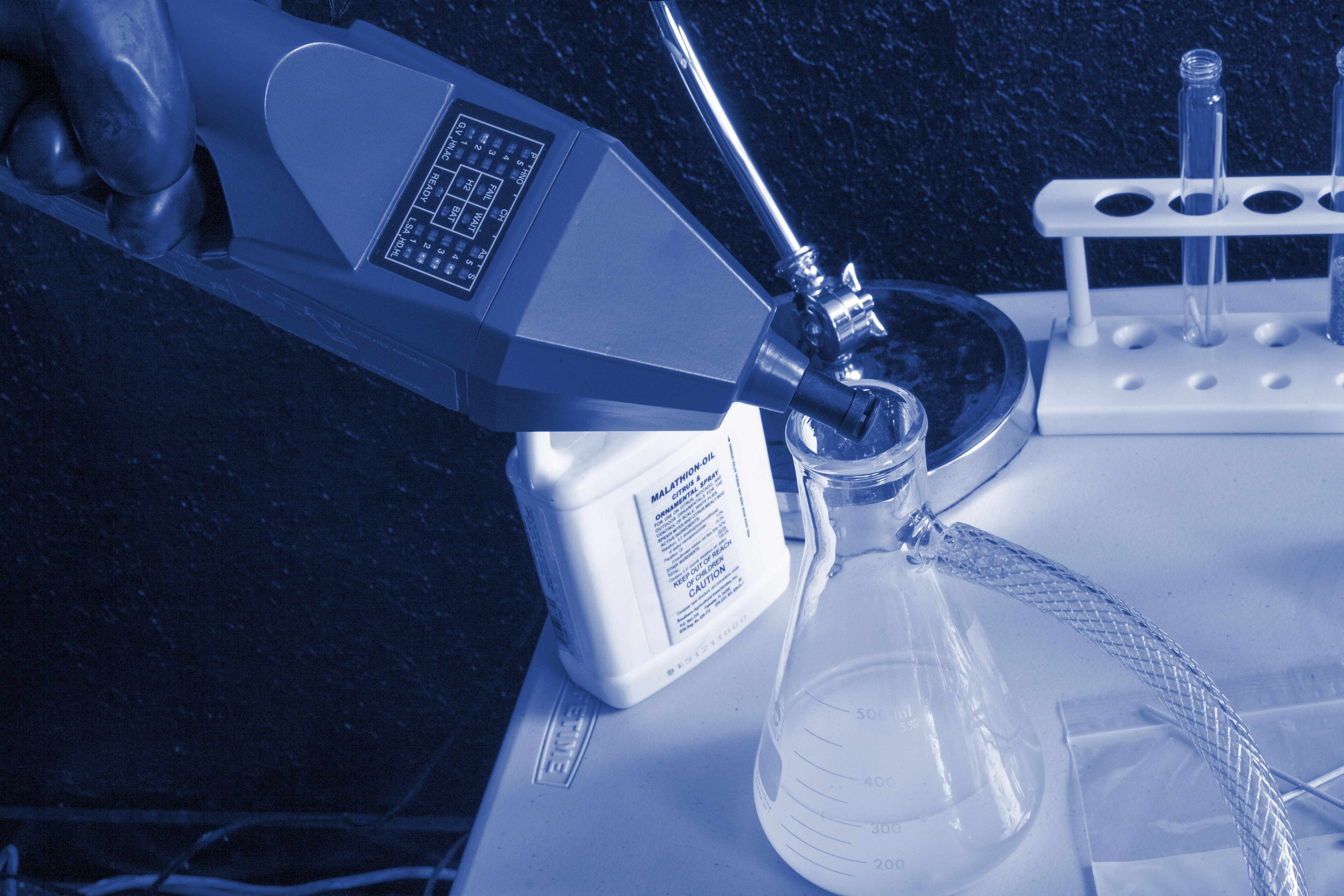
In real CBRN incidents, responders rarely know exactly what they are facing at the start. They often have to act under uncertainty, with limited information, evolving conditions and immediate safety decisions to make.
In this context, the priority is not always to identify the substance first. It is to understand the risk fast enough to protect people, guide reconnaissance and decide what to do next.
Unknown chemical threats therefore require more than a detector. They require a response chain: scene assessment, early warning, operational interpretation, complementary technologies, confirmation when needed and trained decision-making.
1. Think risk before identity
When the substance is unknown, the first question should not only be “What is it?” but “What risk does it create?”
Responders must rapidly assess immediate hazards such as toxicity, flammability, corrosivity, oxygen displacement, contamination spread and potential exposure routes. This risk-based approach helps teams take protective measures before full identification is available.
It also supports faster operational decisions: defining hot, warm and cold zones, adapting PPE, deciding whether to evacuate or shelter in place, and determining where further measurements are needed.
2. Start with scene assessment
Detection is only useful when it is connected to a clear operational purpose. Before using any instrument, responders need to assess the scene: symptoms, visible contamination, possible source areas, environmental conditions, ventilation, wind direction and potential exposure pathways.
This first assessment helps define where to measure, what to look for and how results will influence action.
In unknown-threat situations, symptoms may be the first warning sign. They do not identify the agent, but they can help orient the response and guide the selection of detection and monitoring tools.
3. Do not rely on a single detector
No single technology can cover all chemical threats, all physical forms and all operational environments.
Trace detection, field identification and confirmatory analysis each play a different role. Trace detectors support early warning and operator protection. Identification technologies help determine what the substance is. Laboratory or specialist confirmation may be required for final attribution, investigation or legal purposes.
A layered approach allows responders to cross-interpret signals, reduce uncertainty and move from raw readings to actionable understanding.
The goal is not to make one detector do everything. The goal is to combine technologies intelligently so that each one contributes to the response chain.
4. Prioritize real-time detection for early decisions
In the early phase of a response, speed matters. Responders may need to move through a dynamic environment, locate a hazard, assess whether an area is safe, or determine whether protective measures must be reinforced.
Real-time trace detection supports “detect-to-warn” and “detect-to-protect” strategies. It helps teams act before full identification is available.
Continuous sampling is particularly valuable when the threat may be dispersed, moving, present at low concentration or difficult to locate. It provides immediate operational feedback and helps guide reconnaissance in the field.
5. Understand where AP4C fits in the response chain
The AP4C supports early-stage reconnaissance by providing real-time detection and continuous sampling of gases, vapours and aerosols.
Powered by Proengin’s FPD technology, flame spectrometry, it detects target atoms rather than matching molecules against a predefined library. This makes it particularly relevant when responders face modified compounds, emerging threats, homemade mixtures or substances that may not yet be included in molecular identification databases.
Its role is not to replace identification technologies. It provides the first operational alert layer: warning responders that a hazardous substance may be present, helping guide protective measures and informing the next steps of sampling, identification or confirmation.
AP4C is therefore most effective when used as part of a broader, multi-technology response strategy combining detection, interpretation, confirmation and training.
Conclusion: from detection to understanding
Managing unknown chemical threats is not about waiting for certainty. It is about reducing uncertainty fast enough to protect people and support action.
A strong response combines methodology, technology and training. Responders need to assess the scene, understand the risk, use complementary tools and interpret results in context.
In unknown chemical threat response, preparedness is built on a simple principle: detect early, interpret correctly, confirm when needed and act with confidence.
To go further, watch the full webinar dedicated to unknown chemical threat response and discover how detection, interpretation and complementary technologies help responders make faster, safer decisions in the field.
Link Here: https://youtu.be/CU-cGocLm9c